End of Pagans, a Review of the Satyricons (Fellini's and Petronius's)
 I have something that pains me to say. As much as you may want to climb the massive granite steps of the bathhouse, stand beneath the glorious painted arches of the city of Rome, or hold the beautiful Giton between your arms, it cannot happen, that world does not exist, and has not for more than a thousand years. Even if it was possible, could you? Could you walk down the noisy alleys, between the prostitutes, the thieves, the ill, the dying, the livestock, the children? Would you want to? Would you want to live your life naked, sweating, dirty, and insignificant?
Do you see how much stone there is? How tall the arches are? Do you hear how loud the elephants and trumpets are? Do you see how long and feel how impressive the new Caesar’s Triumph is? Quite a lot impresses. The mystery of their world is like no other, and I’m left envious of how little they know.
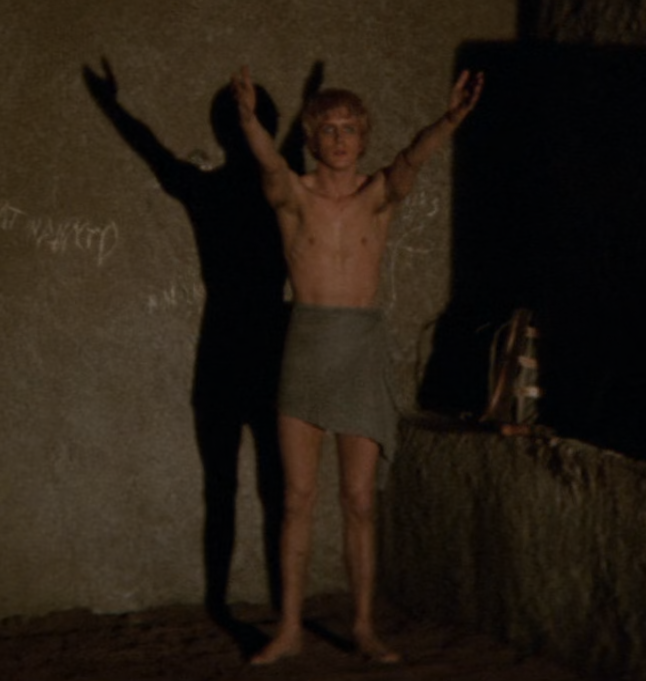
How miserable and cruel the Caesars are; they have you bound in chains and nailed on the cross, paraded in a line among hundreds of other unfortunate souls subject to the same. How miserable and cruel the gods are; they have you cuckolded and then hit you with an earthquake. And then make you impotent. They toy with you, poor mortal man, they play with you and toss you around. And after being thrown against the stone wall, you crumple, limp like a rag doll.
In the Satyricon, as in the ancient world, man is shown to be small and insignificant, overwhelmed by towering statues and cruel gods. Nothing but a machine of flesh, which masticates, defecates, copulates, and cracks the skulls of one another, and then dies indignantly. Recall the final scene of both the book and movie, in which Eumolpus, dying rich and notable, generously leaves his body to be eaten by his friends. The ancient world, especially the Roman, was a stagnant realm, and man was powerless in its face. Man lived in the same world as his grandfather, and his great-grandfather in the same as his great-grandchildren. The world then was eternal, nothing changed, nothing got old, except man, from his birth to his death. The distance in time between our age and the Romans is the same as that between the Romans and the construction of the Pyramids, yet in terms of the realities of life, not much is different between the times of the Romans and that of Pharaonic Egypt.
The Romans live a crude, unconcealed life. They exhibit unconcealed cruelty, of violence and servitude, unconcealed passions, of lust and anger, and unconcealed bodies. They laugh with the mouth wide-open full of food, shout vulgarities. No humility, no shame, just pure, unabashed vanity. Trimalchio’s dinner is this tendency pushed to its extreme, to the point of absurdity. Gluttony, lust, and greed, swinging between long-winded self-exaltation, banal gossip, and idiotic platitudes on life and death, broken up by braying laughter, open-mouthed chewing, and the chattering of hundreds of slaves. It’s disgusting, but at the same time somewhat admirable, in its dumb sincerity, its inability to hide what it truly is.
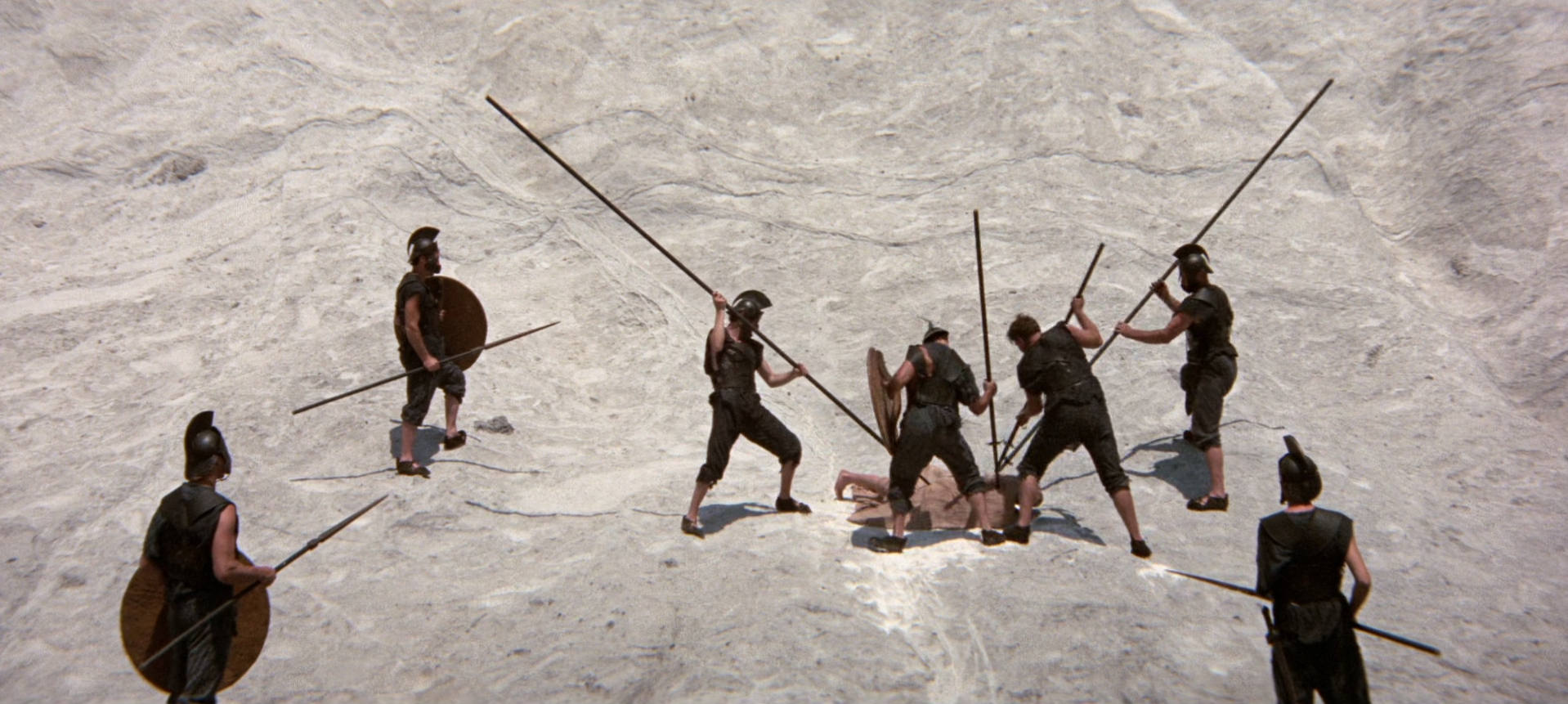
The world of the Satyricon is no longer feasible nor possible, for multiple reasons, one of them being its blatant moral shortfalls. Trimalchio, both of the movie and the book, is reminiscent of Epstein, in his perversion, self-absorption, and vulgarity, especially in light of the recently released emails. In fact, when you read the Satyricon, you get the impression that a Roman would have no qualms with Epstein and his circle. They would be quite confused about how this could be considered even remotely controversial. In a world in which slavery, perversion, and pederasty were not only accepted but promoted, it would be expected that the rich and powerful would become human traffickers. In every scene, slaves by and large are a majority of those on screen, but seldom ever the focus. In our world, this kind of criminality is an exception, worthy of outrage, in the Roman world, it is expected, if not a virtue, something for one to envy. Good riddance.
The other reason, and perhaps the more important, is that no one can truly bring themselves to believe it to be true. Today, with what we know to be true of the world, in a material sense, there is no feasible way one could convince themselves into paganism. It requires a suspension of disbelief and a leap of faith of such obscene proportions, only to end in a world where you are made a mere ant, cast in the shadows of gods and Caesars. Modern man is accustomed to a landscape of rapidly changing technology, lifestyles, mores, and customs, one in which a great man, through sheer will and luck, can steer the course of fate. For us, man is too important for slavery, the world too concrete for superstition. We no longer live in a world of painted stone and bronze, but of plastics and glass, aluminum and steel.
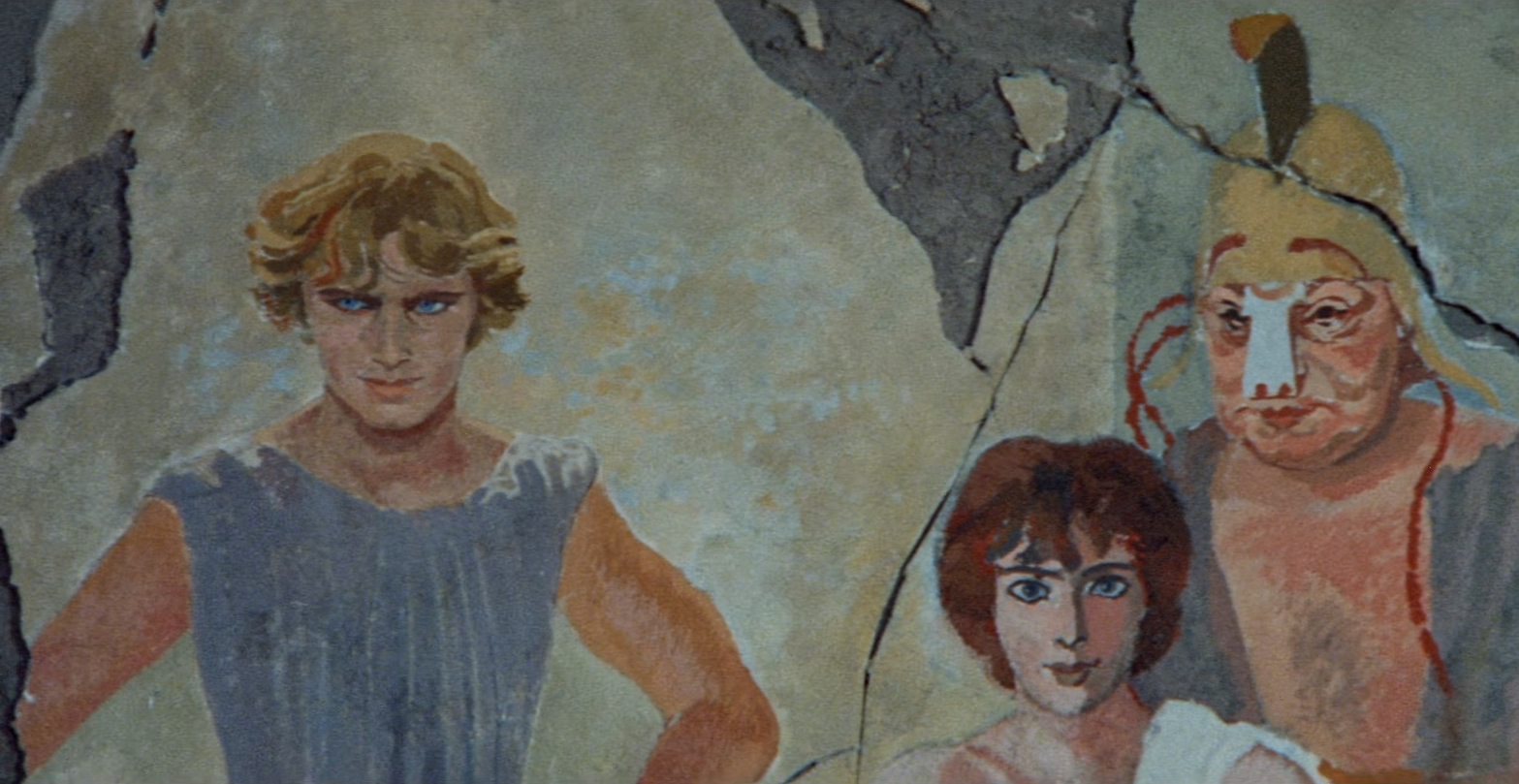
The gods have been supplanted by God, and now the world threatens to supplant God with nothing. With paganism gone, relegated to mere empty symbols that loosely gesture at what has not been for more than a thousand years, the only feasible path for a meaningful and coherent construction of the world and its mysteries, in the real sense, is to find it in what may be left of the religious institutions of your choice (I will not reveal which I hold, for obvious reasons). Your only other option is to resign yourself to the currently prevalent modern “tradition” of Disney nihilism, in which the mysteries of the world are denied, and in its place all you are given are Avengers movies, Disney live-action remakes, and pornography for consolation. Ahead is a stitched-together homunculus half-world, with pop-science and moral inconsistency in the gaping hole where metaphysical structure should lie, and behind a painting of Encolpius on a crumbling stucco.
Comments